Showing posts with label Environment. Show all posts

Monday, August 24, 2009

Petition: designate David Dunlap Observatory lands a National Historic Site

Stumble Upon Toolbar
Byron Wilfert, the Member of Parliament representing Richmond Hill, is sponsoring a petition "Protect the David Dunlap Observatory Lands" to get the David Dunlap Observatory (DDO) lands designated as a National Historic Site. This is the beginning of a process that will hopefully lead to designation of the lands. The lands contain more than the Observatory and are also of historical and environmental interest.

There are no particular restrictions on who can sign the petition such as age or location; however, the more people from Richmond Hill and Canada sign the better.

Click here for the petition itself
The petition is hosted by petitiononline.com.

Privacy note: All of the information you provide will be public except for your email address which can be set as (1) private - the default, (2) available to the Petition Author, and (3) public. I'd recommend either option (2) or (1). At a minimum you must provide your name and email to sign the petition. All other information is optional.

While I didn't provide comments or a phone number, I did give my address as my city and I made my email address available to the petition author.

A confirmation notification will be sent to the email address you provide.

For more information on the DDO and conservation efforts:

Tuesday, March 24, 2009

Earth Hour: Be Part of It

Stumble Upon Toolbar
On Saturday, March 28th, 2009 at 8:30 pm local time Earth Hour arrives. But what is Earth Hour? How is it different from Earth Day?

While Earth Day is about general environmental awareness, Earth Hour’s purpose is to inspire people to take action on climate change. It shows that by turning off non-essential lighting we can reduce electricity use and greenhouse gas emissions. Energy saved during Earth Hour 2008 was estimated from 2%-10% depending on sources (the equivalent of taking about 50,000 cars off the road for an hour). However, the event is not so much about direct energy savings as education and change. It’s a way to make people think about climate change and how they can make a difference.

Earth Hour started March 31st, 2007 in Sydney, Australia, when over two million people and two thousand businesses turned their lights off for one hour.

It went international in 2008 in over 400 cities worldwide. The 35 flagship cities included Montreal, Ottawa, Toronto, and Vancouver. Every Canadian province and territory participated.

Earth Hour 2009

Earth Hour 2009 will be a half hour later to be more in line with astronomical twilight and daylight savings in North America. It’s hoped that more than one billion people around the world will turn their lights out. Participants will get the chance to see truly dark skies and better appreciate the impact of light pollution. Amateur astronomers will set up telescopes to show people the wonders of our night skies as they were meant to be seen. Find out more from the Royal Astronomical Society of Canada (RASC at www.rasc.org) and local newspapers.

How Can You Join In?

Once you’ve made the decision to participate in Earth Hour, your choice of what to do will depend on where you are. Will you be at camp? Get outside and go for a night hike; gather around a campfire to sing songs and tell stories.

Will you be at your meeting place, providing a place for the community to come together? Do some advance
promotion before the date.Write to your local newspaper and tell them what you’re doing. Invite community leaders, parents, your sponsors. Make tin can lanterns to light the area, or beeswax candles to give away. With appropriate permission, fire up the barbecue for hot chocolate, tea and coffee. Organize
an astronomy/stargazing event with your youth to take advantage of the darker skies.

Visit the Earth Hour web site (http://www.earthhour.org/) to register and receive more information.

The Climate Change Connection

Early environmental concerns focused on pollutants and toxins. Awareness of the impact of greenhouse gases came later. Burning fossil fuels releases CO2 (that has been out of circulation for tens of millions of years) back into the environment. This differs from the burning of renewable resources such as plants where the CO2 is part of a much shorter cycle. Excess CO2 has been building up for the last 150 years.

Much of the electric power used for lighting is wasted as excess heat and light. Outdoor lighting blasts skywards instead of being focused. Light pollution also adversely affects people and animals. The study of this is called scotobiology.

Some of the biggest offenders are:
  • Incandescent lamps waste about 90% of their energy by producing heat.
  • Many large signs are not designed to be shut off.
  • Standby modes for appliances built in the last 20 years may be inefficient and wasteful.
Climate change is controversial with avid believers and steadfast skeptics. But there is substantial and growing
scientific evidence that it is real and caused by human activities. Less clear is whether or not it can be stopped or corrected before the consequences are too severe.

How Can we Solve this Problem?

The solution to climate change won’t be one thing. Rather it will be a combination of behavioral and technological changes: improvements in conservation, more efficient technologies, different power generation strategies, and possibly sequestering (storing) greenhouse gases.

We need to look carefully at a wide range of solutions. Modern communications technologies may make it possible to reduce travel. Alternate power technologies such as wind and solar will help, but are not likely to be enough by themselves.

Key parts of the solution may yet come from unexpected places. People, business, government, and research need to work on solutions; more attention will result in less greenwash. People will adopt solutions that save money and time – the right direction and motivation will allow real solutions to evolve and emerge.

Climate change may very well be the most serious long-term problem to face mankind. Getting it wrong could lead not only to environmental and natural disasters, but also to wars and manmade disasters as parts of our world are stressed by changes.

Earth Hour is symbolic and while it may reduce some greenhouse gas emissions, its real purpose is to light the way to a better future. So join in, turn off your lights, step outside and look up. And while you enjoy the delights of dark skies, think about how we can work together to overcome this challenge.

— David Gamey is an enthusiastic Scouter with the 433rd
Toronto Scouting Group and an amateur astronomer.


This article by David Gamey previously appeared in Scouting Life Magazine and is reprinted with permission of Scouts Canada.

Related Activity

The Globe at Night is a project that measures light pollution around the world.  This spring the project is running the week leading into Earth Hour.

It works by getting people to observe the constellation Orion to see which stars are visible.   Visit their site to get charts and information on how to report your results.

Consider measuring both during and after Earth Hour.

Related Articles

Wednesday, November 5, 2008

Light pollution - even more in the spotlight

Stumble Upon Toolbar
The issue of light pollution is underexposed. But it is getting more and more serious attention.

In Light Pollution — Someone Noticed!, Alan Dyer pointed to recent National Geographic coverage that may be the first exposure of many people to the issue.

Events like The Great World Wide Star Count - Oct 20 to Nov 3, 2008 and Light Pollution Awareness - The Globe at Night - Feb 25 to Mar 8 have been drawing attention. Even backouts like we had in 2003 provide for Reflections on light pollution.

Thursday, August 7, 2008

The Economist Has No Clothes ... Why Economics is failing the environment

Stumble Upon Toolbar
Robert Nadeau wrote an opinion piece titled "The Economist Has No Clothes: Unscientific assumptions in economic theory are undermining efforts to solve environmental problems" for Scientific American in March. This is a hugely insightful article and well worth a read.

Basically, he points out that the core of neo-classical economics is a sham. It's creators adapted their equations from the physics of the day and then arbitrarily and without justification reassigned the meaning of variables to suit their own purpose. And despite the fact that the creators were warned that what they were doing was unjustified - presto! Economics suddenly became scientific and rigorous - what complete and total hogwash!

It doesn't matter that the equations they borrowed were shortly to become obsolete themselves, the foundation was flawed from the start. His article looks at the flawed background of economics and key assumptions which are endangering our environment. He says:

Unfortunately, it is clear that neoclassical economics has also become outdated. The theory is based on unscientific assumptions that are hindering the implementation of viable economic solutions for global warming and other menacing environmental problems.

Paraphrasing and commenting these:
  • The market system is a closed circular flow between production and consumption, with no inlets or outlets. (Where do raw materials come from and waste go to?)
  • Natural resources are separate and distinct the market system, and value of these resources are determined by this system. (Doesn't this sound like a recipe for delusion and denial?)
  • The costs of damage to the natural environment lie outside the market system. (The system does not account for the true cost of environmental damage).
  • Natural resources are largely inexhaustible or have alternatives. (No acknowledgement of limits or feasibility).
  • There are no biophysical limits to the growth of market systems. (Doh!)

He concludes that these underlying flaws in economic theory are a major obstacle to addressing climate change and environmental issues. Again, from the article:

Because neoclassical economics does not even acknowledge the costs of environmental problems and the limits to economic growth, it constitutes one of the greatest barriers to combating climate change and other threats to the planet. It is imperative that economists devise new theories that will take all the realities of our global system into account.


Tuesday, July 1, 2008

Tunguska's Legacy

Stumble Upon Toolbar
One hundred years ago today[1] there was a very large explosion over the lower Tunguska river in Siberia[2]. Known as the Tunguska event, the explosion is estimated to have been equivalent to a blast of at least 5 million tons of TNT and felled over 80 million trees. The cause was a mystery for decades. Evidence of Nickel and Iridium have been found near the site which supports theories of a meteor impact or air burst. Eyewitnesses told their stories to investigators years later. To date, no crater or fragments have been found.

Unaware of our dangerous neighbourhood

For millennia people have lived in ignorance of the space around our planet. Comets were thought to be bad omens and portenders of catastrophe. Yet, asteroids and meteoroids whizzed by us unnoticed. What we do notice are the frequent meteor showers caused by small particles burning up in the atmosphere and occasional fireballs and small explosions caused by larger rocks.

Very occasionally one of these larger rocks would get too close and explode low in the atmosphere or impact the planet leaving devastation and craters. And on very rare occasions there are devastating explosions. The best known of these was about 65 million years ago and is credited with killing off the dinosaurs.

It has only been very recently that we have recognized impact sites for what they are. The earth, weather, and time are very good at obliterating the evidence. Even the origin of the famous Barringer Crater in Arizona was controversial up until 1960! And the Barringer crater looks like it was moved from the moon to the dessert.

Tunguska didn't leave a crater and wasn't investigated until years later. It certainly isn't as obvious as Barringer or other sites. While the meteor explosion is the leading theory, there is an alternate one based on the idea of a explosive volcanic gases (a micro-Verneshot). There are also a large number of bizarre and wild ideas as to its' origin.

The legacy of Tunguska and other impacts has been to raise awareness amongst scientists, policy makers, and the public that impacts from meteors, comets, and asteroids do happen and that action can and should be taken to protect people and the environment.

What can we Do?

If we are unlucky enough to have a really large rock bearing down on us and about to strike then there is not much we can do. But these are exceptionally rare events and we should have lots of time to act. It's is certainly in our best interest to be prepared to do something to prevent this kind of event if we can.

1. Don't Panic!

While the thought of multi-megaton impacts sounds pretty scary, its important not to over react. How does this all stack up?
  • Small impacts and near misses happen all the time. [3][4]
  • Big impacts, like Tunguska, are uncommon. When they do happen, they are likely to be in remote areas or over oceans.
  • Really massive impacts, like the one the killed off the dinosaurs, are incredibly rare. So rare, it's almost impossible to get a real feeling for the time-scale even though we can measure it.
It turns out that we should be able to something. Quite a lot actually. Now if you're thinking of movies like Armageddon or Deep Impact, reality is a bit different.

2. Size the Risk

Consider, if Tunguska sized events happen once every hundred years, then there will have been more that 1/2 million of them since the dinosaurs died out. If they happened every 1000 years, that's still over 50,000 strikes. There is no historical evidence indicating similar strikes in written history[5] which covers the last 6000 years or so.

How do we do this? By studying both the sky and the Earth.
  • Geologists have been getting very good at finding impact sites on Earth. There is a online impact database, here (a Canadian contribution). This can tell us a lot about what reached the ground.
  • There are all sky camera networks to detect fireballs from meteors, here and here.
  • Recent work has detected Explosions on the Moon which can tell us a bit about how dangerous our neighbourhood is by watching the impact on a body unprotected by an atmosphere.
  • The US Congress has mandated and funded an effort to detect, catalogue, and track any really catastrophically dangerous asteroids. This effort is also detecting a lot of smaller rocks including Tunguska sized meteoroids, as well as comets.
  • Canada is launching a micro-satellite called Neossat to detect and help track Near Earth Objects. See Don't Blame Canada.
These efforts will not only let us size the risk, but they will also give us advance warning.

3. Prepare for Action

Advance warning will let us focus on the dangerous rocks and give us the years needed to prepare. It will also give us techniques that will be more effective and far less dramatic than throwing nuclear weapons around.

Research is already underway around the world on things that can be done. And a broad set of tools is being proposed to deal with the risk. They range from
  • radio tagging an asteroid to better understand it's orbit
  • painting one so that years of Sunlight alters its orbit for us.
  • nudging one using a space tug
It turns out that there are a few rocks of concern.
  • 99942 Apophis is about 270 m and will come very close in 2029 with a possible impact in 2036. As measurements have improved the likelihood of an impact has been reduced and is now considered unlikely
  • 1950DA is about 1.4 km and is a risk to impact in the year 2880
  • 2007 VK184 is a 130 m rock of most concern right now with a chance of impact in 2048
Even with this new rock on the block, Apophis as the poster child bad boy has driven planning.
  • The Planetary Society's Apophis competition, here.
  • B612 who what to alter an asteroids orbit by 2015, here.*
  • US Bill supporting a mission to radio tag Apophis, here.*
  • A Russian project to tag Apophis, here.*
Thanks to other bloggers and their readers for some of the links* above.

Some other Tunguska anniversary posts

Oh, and back at Tunguska

An Italian research team may have found evidence of an impact body that survived the air burst, here.

-----
[1] The explosion occurred at 7:14am local time on June 17th, 1908 in the Julian Calendar in use there at the time. This was June 30th on western calendars. Adjusting for time zones the blast was at 7:14PM EST June 29th. For a versatile date converter capable of converting between many calendars see here. My original notes for this were based on an old Wikipedia entry with an incorrect date and was going to publish this on June 30th on the Julian calendar - so I'm now late beaten to the punch :(
[2] The location, given as 60°55' N, 101°57'E, is pretty remote as you can see here.
[3] I've written about asteroid near misses before, here.
[4] I've also written about fear mongers before, here.
[5] There is some speculation that the Biblical tale of Lot's wife may relate to such a strike. But it seems designed to sell a book. See here, and here. A very strong critique (with some mild bad language) here. See [4] above.

Saturday, May 31, 2008

Greenwash, Security Theatre, and Skepticism - Critical Thinking

Stumble Upon Toolbar
Critical thinking is an essential life skill. It lets us make good decisions and can protect us. People don't exercise it all the time, but people who exercise it more tend to be more successful. And people who fail to exercise it can become victims of one sort or another.

So I wanted to comment on some current examples where critical thinking helps.

Greenwash

The term "Greenwash" has been around for about 20 years but has only recently made it into the mainstream. Basically, Greenwashing is about companies exaggerating and overstating their environmental contribution. An advertising con-job carried out on the public. Often where companies spend more advertising their greenness than actually contributing to the environment.
  • For a history and definition see Wikipedia, here.
  • For a consumer index, see the Greenwashing Index, here.
Companies marketing products have a long history of spinning the benefits of their products even when the benefits are dubious. The spin can range from the relatively harmless, such as stating what a product already does, to deception, such as deflecting attention away from a problem area. Critical thinking can help you see through this.

Update: I saw a related survey on "What should we do about bogus ‘green’ technologies?" at another Scouters blog.

Security Theatre

The term "Security Theatre isn't as mainstream yet. It refers to security measures that give people the illusion of security rather than providing real and measurable security. A lot of the security measures put in place since 9/11 fall into this category.

Examples of this include no-fly-lists. While they seem like a good idea at first glance, they break down under scrutiny. The problem with the list is that it isn't properly maintained; it is subject to false alarms - it has been used to detain babies, children, well known public figures, politicians, sky-marshalls, and inconvenience many thousands of people; there is no visible oversight of its effectiveness; known terrorist suspects have been kept off it; and there is no evidence to support that it has ever stopped an attack. I won't get into more detail on this debate, but if you're interested you can find more by one of the leading critics of Security Theatre, Bruce Schneier, who has posted many articles on his widely read blog. A few are below:
Security Theatre and it's mindset has been a healthy target for comedy:
  • The Chaser, an Australian team has made fun of this with such episodes as "Airport Security" and the "Trojan Horse". Video clips are available on You-Tube here and here.
  • The TV series "Boston Legal" dedicated part of an episode to the absurdities of the no-fly list. An audio clip can be found here (mild language warning).
Skepticism and extraordinary claims

The world is full of doomsday prophecies and other bunk. A healthy does of skepticism is useful for dealing with extraordinary claims. There are lots of people who will waste your time seeking attention, money, and fame. All of this they take from you without providing anything of value back.

Current examples include:
  • The end of the Mayan calendar in 2012 predicts the end of civilization. This is no more true than suggesting the earth would end after December 31st, 999AD or 9999AD - the calendar is just a bit stranger. See here and here.
  • Planet X is coming to destroy us. Planet X was originally an astronomical reference to a presumed missing planet or unknown planet beyond Neptune. Pluto didn't fit the bill and it took over 50 years to resolve the facts. Later the name was usurped by conspiracy theorists. The predictions aren't supported by facts and the date for doomsday has been revised. See articles, here, here and a series of articles here.
Update: The crop of bunk surrounding 2012 never seems to to end. Fear mongers and misguided folks keep reviving it and scaring people with these fabrications. Dr. Ian O'Neill at Astroengine has written a fine series of articles debunking these. Have a look at 2012 Doomsday Fabrication: Abusing Science and Making Money.

Some bunk that has passed their best before dates:
So exercise your critical thinking and save your time and money. Better don't let the fear mongers profit!

Wanting to believe

People are often predisposed to believe in a cause. The problem with this is that people often suspend their critical thinking and can be taken in. They can overreact to circumstances. Or they can mis-evaluate the situation.

To demonstrate this, a group took a petition to an environmental event. The petitioners (correctly) claimed that there was a substance associated with all major sources of water pollution and sought a ban on the chemical. What was it? Check out dhmo.org for a wealth of information of dihydrogen monoxide (dHmO, aka H2O). Sadly, a large number of people just listened to the spin and signed the petition to ban water!

While there is nothing wrong with wanting to believe or belong, we still need to be careful to apply some critical thinking.

Monday, February 25, 2008

Light Pollution Awareness - The Globe at Night - Feb 25 to Mar 8

Stumble Upon Toolbar
Over the next 13 days (February 25th through March 8th, 2008) there is an opportunity to participate in a world wide light pollution awareness project. It looks to be both easy and fun!

The folks at GLOBE and NOAO in conjunction with some other sponsors have created a educational awareness package complete with static and interactive training aids and specialized star charts.
Click here for more details on the Globe at Night light pollution awareness project.
To participate you'll need to be able to find Orion, have a good eye, and access to a computer to report your results.

Weather permitting, the 433rd will make observations during our regular meeting this week and next week on our Tour of the DDO. Hopefully, this will show the positive effect of the light pollution prevention measures put in place by the Town of Richmond Hill.

I also intend to repeat this exercise during Earth Hour to see if I can notice any visible impact and will post our results here.

I've written about light pollution before.

Many thanks to the Bad Astronomer for pointing this one out!

PS: I forgot, you may want to check out your local clear sky clocks. If you don't know about these please see this article.

Here are some other web pages and blogs endorsing the Globe at Night project:
  • NASA - here.
  • The Royal Astronomical Society of Canada (RASC) - here.
  • The Bad Astronomer - here.
  • Star Stryder - here.
  • Music of the Spheres - here.
  • Chirp and Chatter - here.

Sunday, February 17, 2008

Black Hole discoverer to be eaten by land developers

Stumble Upon Toolbar
The facility that first confirmed the existence of black holes now faces annihilation behind a $100M event horizon at the hands of land developers.

I have written about this previously, here.

A new link from the Richmond Hill Naturalists can be found here. They have set up an online petition.
  • The text and form can be found here. The signature form is at the bottom of the petition text page.
This is a sad development on many levels.

Please add your voice!

An satellite view of the site is available here.

Some of the issues include:
  • While light pollution has been cited as crippling the scope, observations are made using instruments that see light that is outside the range people can see.
  • While the telescope cannot see to the edges of the universe like larger and more modern scopes, it can continue to do useful research.
  • The disposition of the telescope is uncertain and may be left up to the buyer.
  • The site is considered historical by many, including possible archeological interest.
  • The site is also of environmental interest.
Some recent coverage of the proposed sale:

Friday, February 1, 2008

Reflections on light pollution

Stumble Upon Toolbar
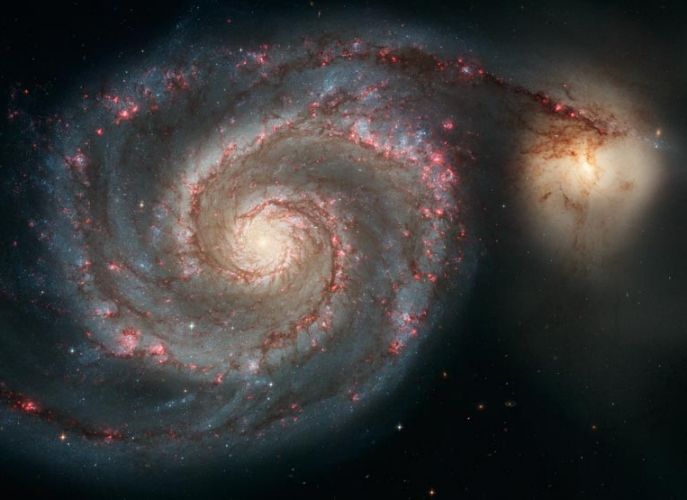
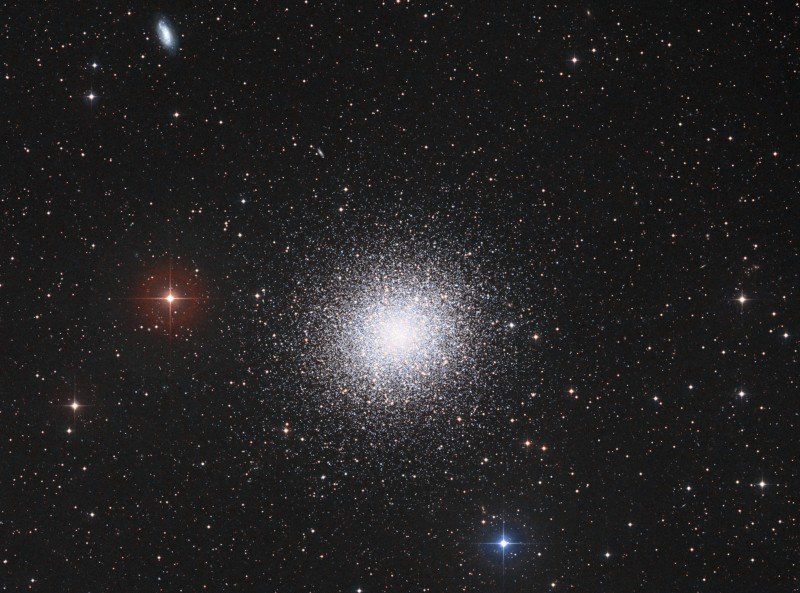
Images courtesy of NASA APOD, click image for more info
(Credit & Copyright M13: Noel Carboni, Digitized Sky Survey) and
(Credit M51: NASA, ESA, and The Hubble Heritage Team (STScI/AURA))


Light pollution is the bane of Astronomers. Professional astronomers often use instruments that operate outside of the visible spectrum. That's how telescopes like the DDO (see here to help save it) can still be effective even when located near a city. Recent studies suggest there are also biological effects on people, animals, and plants.

The ill-timed Earth Hour event will disappoint North Americans this year. However, you may remember the North Eastern Blackout of 2003.

That evening, I took my dog for a walk at the usual time. I took along a flashlight just in case. In good scouting fashion I was both prepared and didn't need to use it. Most of the people I met walking their dogs at the same time did not expect it to be so dark so soon! I told several families that I met that I would have a telescope on my front lawn. Upon my return, I set up my 8" non-computerized reflector scope on the front lawn. A couple of the families stopped by to look.

My first target, was the great globular cluster M-13 in Hercules. Without the city's interference, there was no effort searching for it. Next, I tried the Whirlpool Galaxy (M-51) beneath the handle of the big dipper in Canes Venatici (the hunting dogs). While I'd seen it before in larger scopes, this was a target that I'd never found myself. A few star hops and soon I found it near a small triangle of stars. While little more than small grey smudges in my scope, it was clearly visible. (Note: beautiful photos like the ones above require long exposure times as people don't actually see that well through telescopes).

Unfortunately, around about 10pm the full moon came up and ruined the party.

The next night with the lights back on, I returned. And even though I knew I was looking right at it, I couldn't see event a hint of the Whirlpool.

Sunday, January 20, 2008

EarthHour - Saturday March 29, 2008 @ 8pm

Stumble Upon Toolbar
Earth Hour is an interesting idea cooked up by the citizens of Sydney Australia and begun on March 31st, 2007. From the Toronto Star,
More than 2 million residents pulled the plug and the city went dark. Energy usage dropped by 10.2 per cent across the business district, more than double what organizers were aiming for, representing a reduction of 25 tonnes of carbon dioxide – the equivalent of taking 48,613 cars off the road for an hour.
Earth Hour is a great idea to show people the impact of climate change. It also shows people about the impact of light pollution. Light pollution is a major problem for astronomers but it also now being recognized as having other environmental effects. They've even got a word for it, scotobiology. The basic idea from a recent article, here, is that:
Plants and animals are programmed to function in a certain pattern of daylight and darkness. Alter it and unhealthy things happen. It applies equally to organisms that are active at night and those, including humans, whose bodies require regular periods with the lights out.
For more information, see the Earth Hour web page and World Wildlife Federation Earth Hour web page.

Unfortunately the organizers don't seem to have taken into consideration that most of North America will be on Daylight Savings Time during Earth Hour and people will not get the full effect of the night sky. Here's my hope that they schedule it an hour later (or two weeks earlier) in 2009.

I will have my telescope ready!